The role of EC and nutrient strength in growing
Electrical Conductivity (EC) of a nutrient solution is a crucial measure of the total available nutrients in a sample.
View EC Tools
Electrical Conductivity (EC) of a nutrient solution is a crucial measure of the total available nutrients in a sample.
View EC ToolsElectrical Conductivity (EC) is an essential measurement that indicates the total concentration of nutrients available to your plants. These nutrients are present as dissolved ions (salts).
When nutrients dissolve in water, they break down into charged particles called ions. The more nutrients dissolved in water, the higher the electrical conductivity. Therefore, measuring the Electrical Conductivity (EC) of water is a reliable method for assessing nutrient strength.
Plants require the right nutrient concentration to thrive. Too weak and they’ll be malnourished and grow slowly. Too strong and you risk nutrient burn, where the high salt concentration pulls water out of the roots damaging them. This is why a conductivity meter is crucial for measuring and adjusting your nutrient strength.
There is no universal scale for measuring conductivity. Nutrient strength can be shown on different scales, including Electrical Conductivity (EC), Parts Per Million (PPM = EC x 700), Total Dissolved Solids (TDS = EC x 500), and Conductivity Factor (CF = EC x 10). These scales all describe the concentration of dissolved nutrients and can be converted from one scale to another. It’s important to note that EC only displays the total amount of nutrients available to your plant, not a breakdown of the individual nutrients.


Measure your reservoir to ensure proper EC levels to feed plants. In the root zone use the Bluelab Pulse Meter to measure the EC level available for the roots to take up. Runoff, while not in the root zone, will still give a good approximation of available nutrient levels, ensure that run off is at 20%. Lastly in the water supply, unless using deionised or reverse osmosis water, contaminate ions will affect actual EC values preventing optimal nutrient availability.
Usually this comes down to cleaning and calibration. Regularly cleaning and calibrating your EC meter is important to ensure accuracy, ensure to follow recommended procedures. Also, ensure that both meters are using the same scale.
Your EC can either get too high or too low. If your EC becomes too high, it can cause nutrient burn and toxicity. Signs of this include discoloration, brown spots, curled or brown edges, and wilted or dropped leaves. Whereas if EC is too low, your plant won't be able to get enough food, resulting in the following symptoms: holes or brown spots in the leaf, stunted growth, twisted or misshapen leaves, and discoloration. This consequently results in reduced yield and crop failure. Being able to consistently monitor and measure EC with Bluelab’s products will mean any issues can be spotted and fixed immediately, reducing the risk of crop loss.
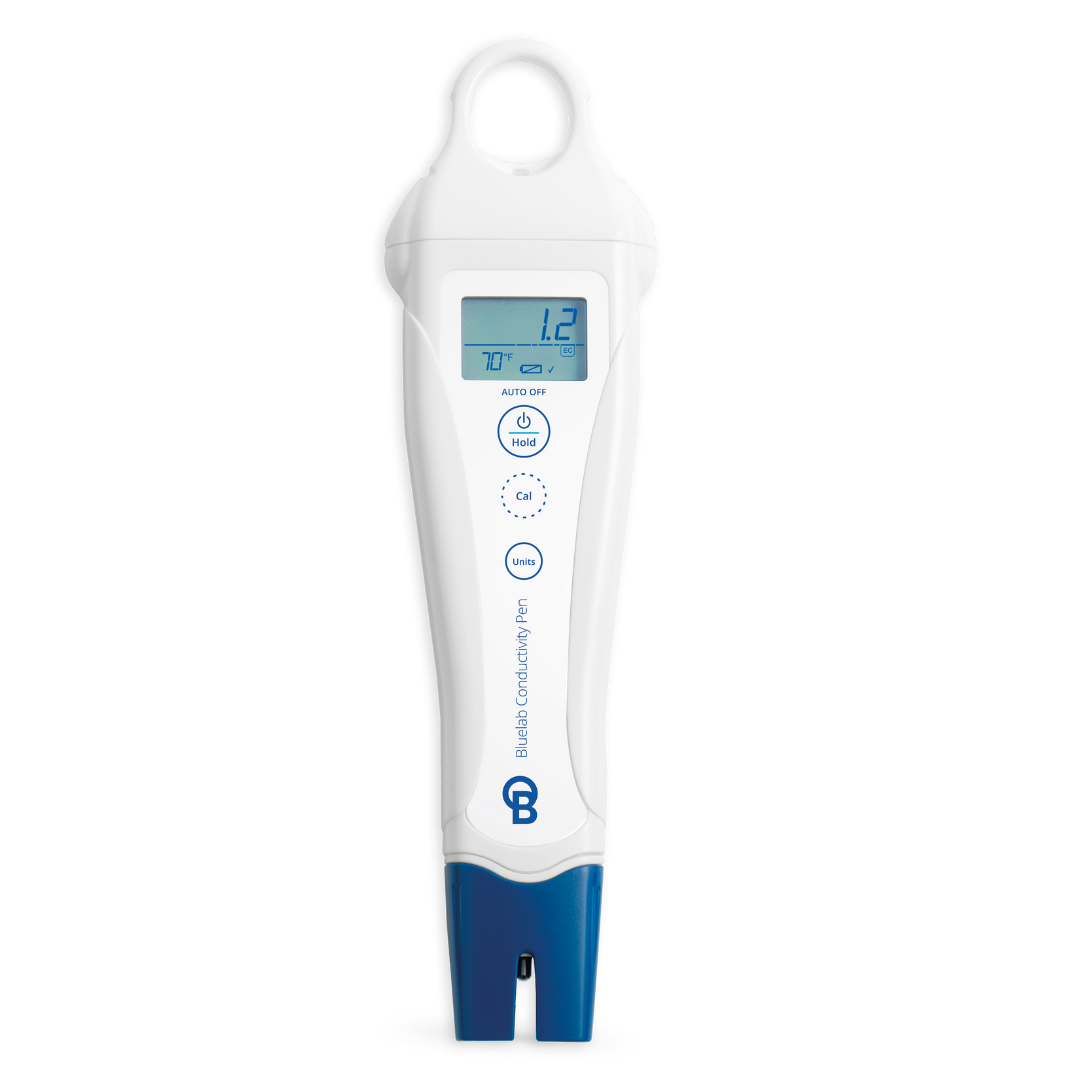
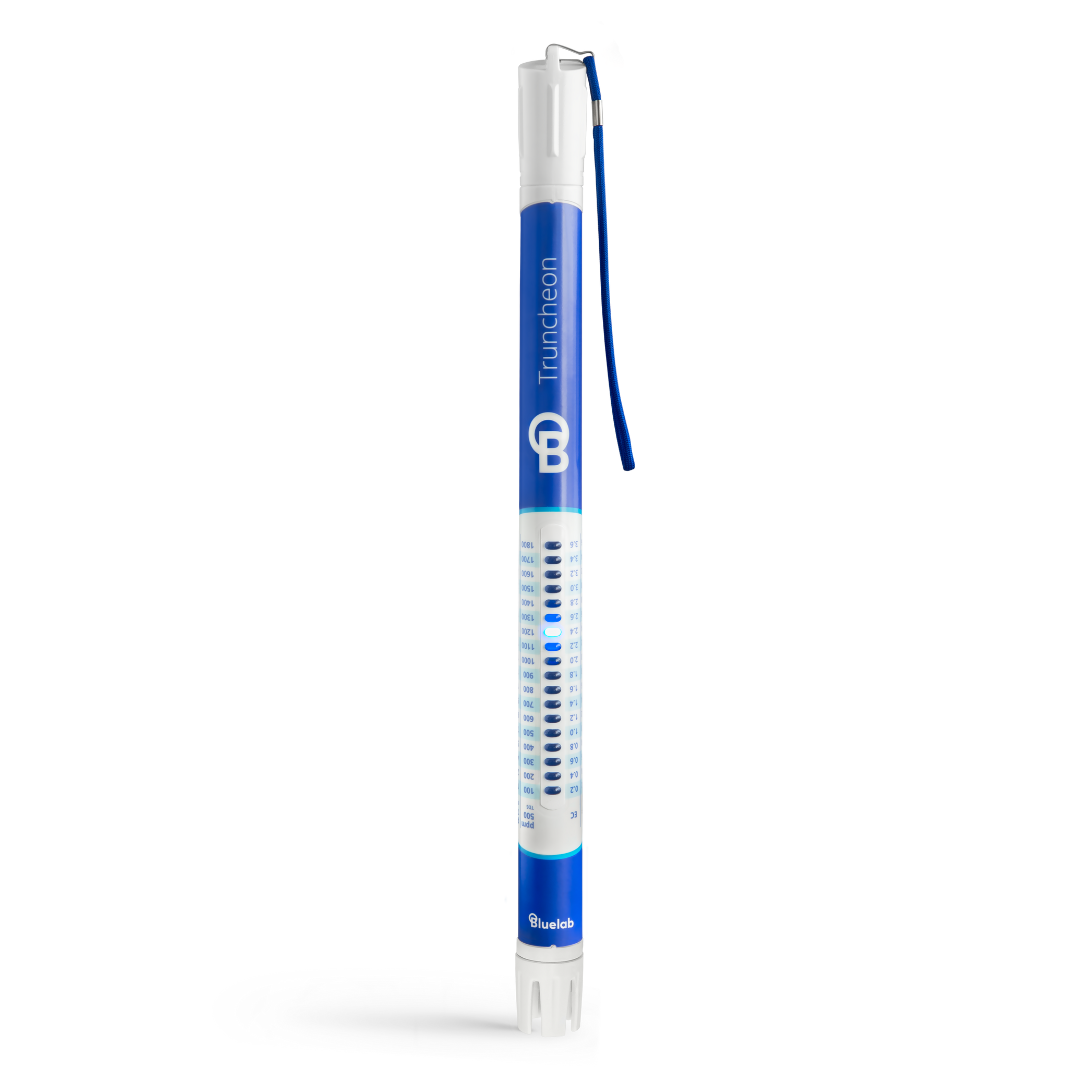
You should use Bluelab 2.77 EC Conductivity Standard Solution to check your EC probes. Some meters like the Truncheon does not require calibration as it comes factory calibrated. Other meters like the Conductivity Pen or Combo Meter should be checked in calibration solution regularly to ensure accuracy.
Checking runoff EC is important because it provides insight into the nutrient levels in your growing medium. By measuring the EC of your runoff, you can determine if the nutrients being absorbed by the plants are balanced. If the runoff EC is significantly higher than your input EC, it may indicate that the plants are not taking up enough nutrients or that there is a buildup of salts in the medium. This can help you adjust your irrigation practices, ensuring that you are providing the right amount of nutrients.
EC only tells you the total dissolved salts, not individual nutrients like nitrogen (N), phosphorus (P), potassium (K) or micronutrients. Its possible to have the right EC levels but have nutrient deficiency, this is why its important to follow recommended mixing ratios.
| Crop | Ideal EC |
|---|---|
| Basil | 1.0 – 1.4 |
| Beans | 1.8 – 2.5 |
| Blueberry | 1.8 – 2.0 |
| Broccoli | 1.4 – 2.4 |
| Celery | 1.5 – 2.4 |
| Cucumber | 1.6 – 2.4 |
| Capsicum | 2.0 – 2.7 |
| Lavender | 1.0 – 1.4 |
| Lettuce | 0.4 – 1.2 |
| Melons | 1.0 – 2.2 |
| Roses | 1.8 – 2.6 |
| Pumpkin | 1.4 – 2.4 |
| Tomato | 2.2 – 2.8 |

Incorrect EC (Electrical Conductivity) in plants have some tell-tale signs. Look out for discoloured leaves, stunted growth or poor root quality.

Do you think your plants are suffering from a nutrient deficiency? In our comprehensive guide, we cover each nutrient deficiency and how to treat these.

Want the lowdown on pH, EC and temperature? In this post, we take a closer look at each parameter and tell you how to adjust out-of-range readings.

What is conductivity? We cover everything you need to know about this fundamental parameter, as well as how to measure it in different growing media.

Want to know more about testing options for EC, pH and temperature? Everest Fernandez tells us how to build the ultimate plant health fundamentals toolkit.

Want to discover why water quality is critical to a successful growing operation? Find out more about common water sources and how to test water quality.
This is our USA store. It looks like you're in [Country]. For a better shopping experience with local currency and shipping, we recommend our [Region] store.